The Difference Between Dry and Dehydrated Skin—and What to Use for Each
“Dry” and “dehydrated” are often used interchangeably—but they describe very different skin conditions. Knowing which one you have is the key to building an effective routine.
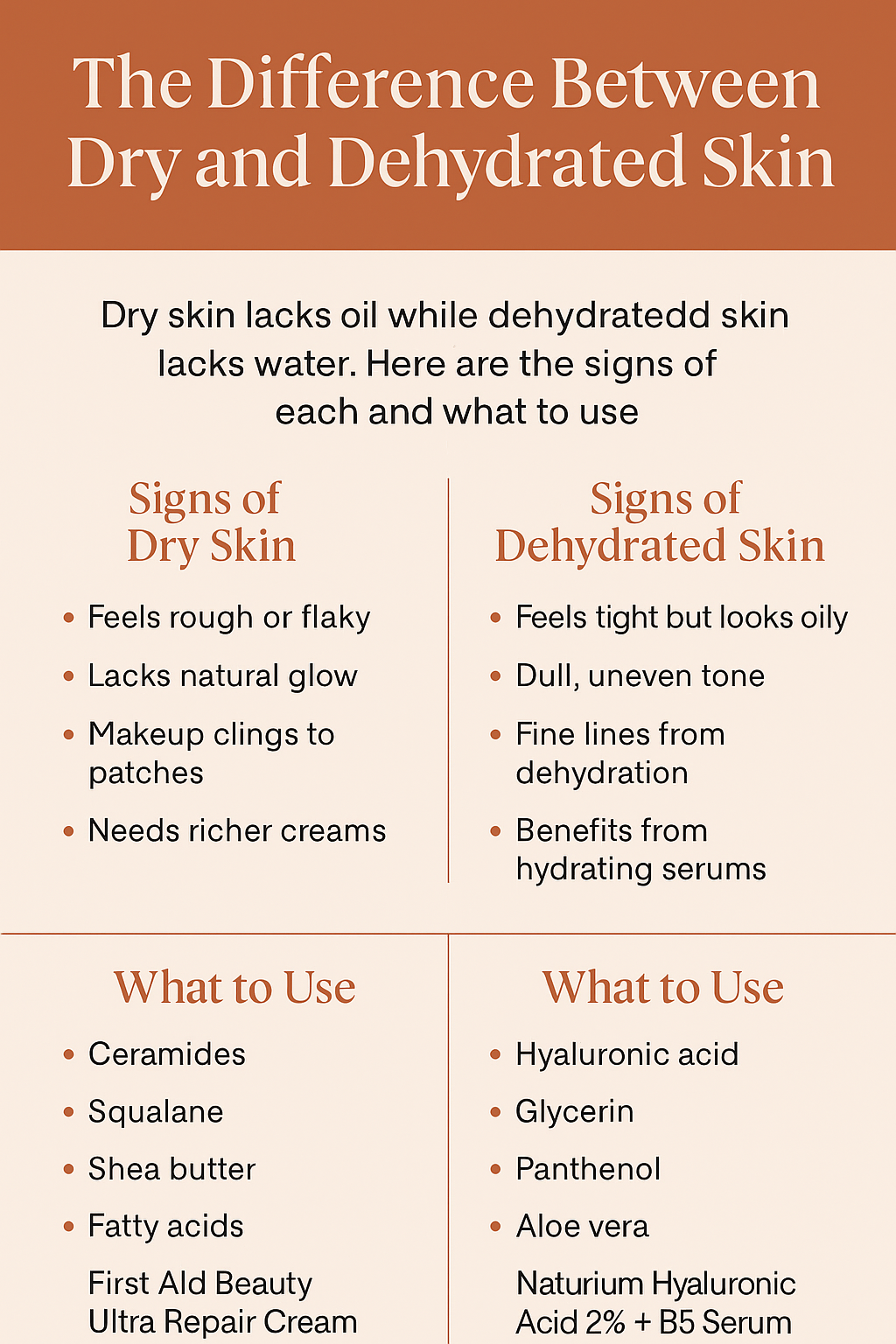
Dry skin lacks oil. It’s a skin type, meaning it’s consistent year-round and tends to feel tight or flaky.
Dehydrated skin lacks water. It’s a temporary condition caused by environmental factors, over-exfoliation, or harsh cleansers—and any skin type can experience it, even oily or combination skin.
How to Tell Which You Have
Signs of Dry Skin
Feels rough or flaky
Lacks natural glow
Makeup clings to patches
Needs richer creams
Signs of Dehydrated Skin
Feels tight but looks oily
Dull, uneven tone
Fine lines from dehydration
Benefits from hydrating serums
Quick test:
Pinch your cheek gently. If the skin stays tented or looks creased, you’re likely dehydrated. If it feels rough even after moisturizing, it’s probably dry.
What to Use for Dry Skin
Dry skin needs moisture-rich products that restore and seal in oils. Look for barrier-supporting ingredients that protect from transepidermal water loss (TEWL).
Key ingredients:
Ceramides
Squalane
Shea butter
Fatty acids
Recommended products:
First Aid Beauty Ultra Repair Cream – Ceramide-rich and fragrance-free
Biossance Squalane + Omega Repair Cream – Nourishing and non-greasy
Ursa Major Golden Hour Recovery Cream – Perfect for nightly barrier support
Routine tip:
Apply moisturizer to slightly damp skin to lock in hydration more effectively.
What to Use for Dehydrated Skin
Dehydrated skin needs water-based hydration and ingredients that pull moisture into the skin while strengthening its barrier.
Key ingredients:
Hyaluronic acid
Glycerin
Panthenol
Aloe vera
Recommended products:
Naturium Hyaluronic Acid 2% + B5 Serum – Deep hydration without stickiness
Pyunkang Yul Essence Toner – Soothes and replenishes water loss
Krave Beauty Oat So Simple Water Cream – Lightweight and barrier-safe
Routine tip:
Use a hydrating serum or toner before applying moisturizer, and avoid alcohol-heavy or foaming cleansers that strip your skin.
Can You Have Both Dry and Dehydrated Skin?
Absolutely—and many people do. In that case, your routine should combine both oil and water-based hydration. Layer a hydrating serum (like hyaluronic acid) underneath a nourishing cream to treat both issues simultaneously.
How to Prevent Dehydration and Dryness
Limit hot showers and harsh cleansers
Add a humidifier to your bedroom or workspace
Avoid over-exfoliating—especially with acids or scrubs
Always follow actives with moisturizer
Drink enough water, but don’t rely on it alone for skin hydration
Understanding whether your skin is dry or dehydrated can completely transform your routine. Once you know what your skin truly needs—oil replenishment vs. water restoration—you can choose products that strengthen your barrier, balance your skin, and bring back that healthy glow.